OUR RESEARCH
Learn about what we study in the lab
OUR GUIDING PHILOSPHY
Consciousness isn’t just a scientific mystery; it raises pressing ethical questions: How do we know when babies or patients with brain injuries are aware? Which animals share this capacity? Could AI ever be conscious? These dilemmas affect medicine, law and society. We view consciousness as shaped by what the brain knows and expects — past experience and internal models guide what we perceive, and perception reshapes those models. Because no two people share the same history, each person’s consciousness is unique. To understand this diversity, we study experience in the wild — measuring brain and body signals while people engage with art, nature and each other — and we combine invasive and non‑invasive recordings, neuroimaging, computational models and patient studies to link expectations to conscious experience.
Consciousness in the Wild
Most consciousness research happens in controlled environments (i.e. research labs). We instead venture into museums, virtual worlds and other real‑life settings to record brain and body signals as people experience the world. Using biosensors, neuroimaging and self‑report, we build a catalogue of consciousness in its natural setting, capturing both shared patterns and individual differences.
Gaze patterns of viewers watching a projection at the Dortmunder U (Sept 2025)
Thanks to Story Lab kiU.
Mapping the Structure of Experience
Consciousness feels ordered: spatial layouts, temporal sequences and narratives give meaning to what we see and remember. We link subjective reports to neural activity to reveal how perception, memory and prediction create this architecture. Our goal is to explain why consciousness feels continuous, stable and richly patterned.

TESTING Theories of Consciousness
Competing theories offer radically different answers to why the brain generates awareness. We lead adversarial collaborations that pit leading accounts (e.g., Global Workspace vs. Integrated Information Theory) against one another. Using preregistered protocols and multimodal recordings (fMRI, MEG, ECoG), we evaluate where each theory succeeds or fails and build frameworks for aligning and unifying them.
Video created by Harin Oh
Building Blocks of Time in the Mind
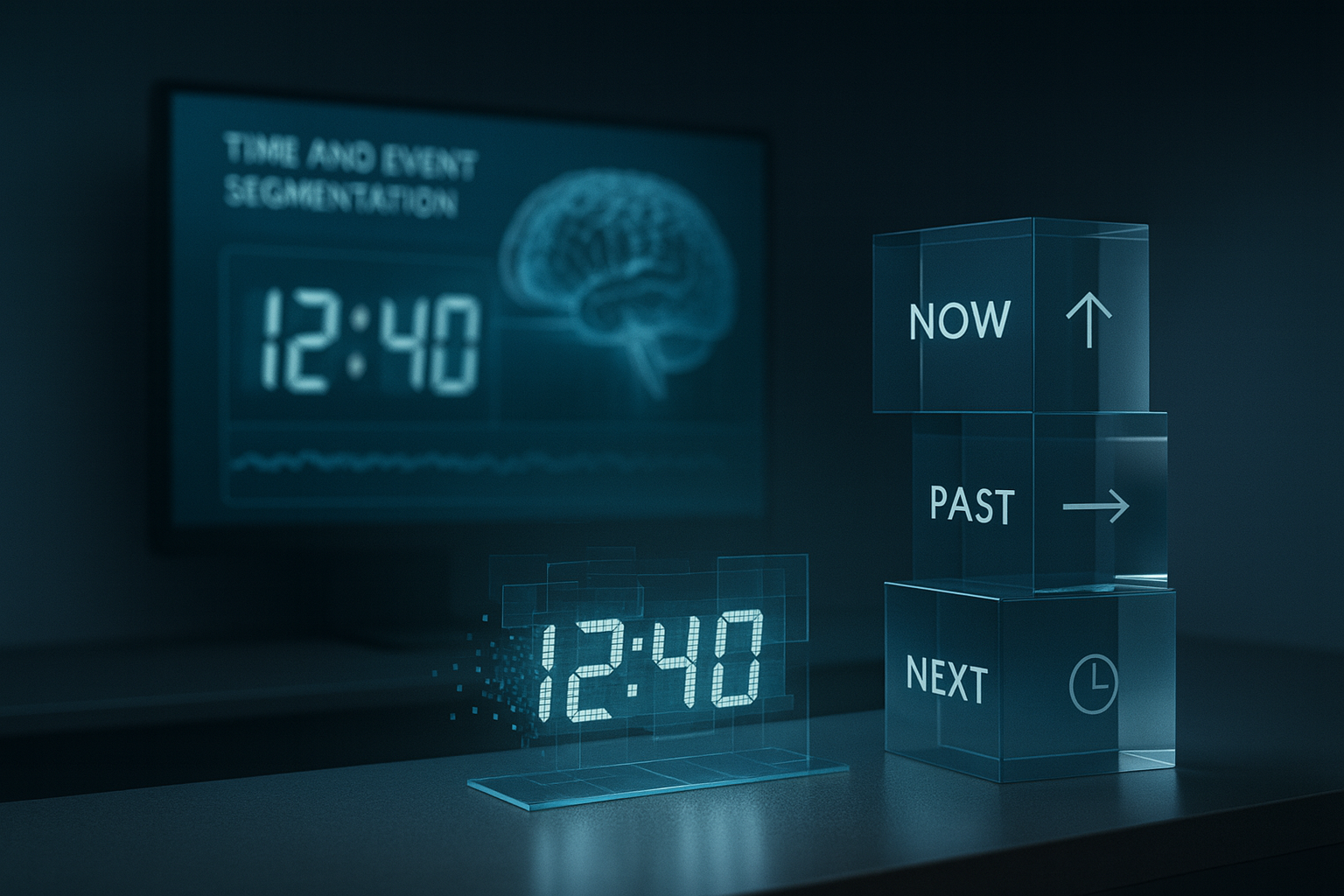
Life is not perceived as a blur but as events with beginnings, middles and ends. We study how the brain segments continuous experience into meaningful chunks and how these boundaries influence learning, emotion and surprise. By combining computational models, neuroimaging and intracranial recordings, we uncover the neural code that structures time and gives rise to rhythm and narrative.
Perception to Memory
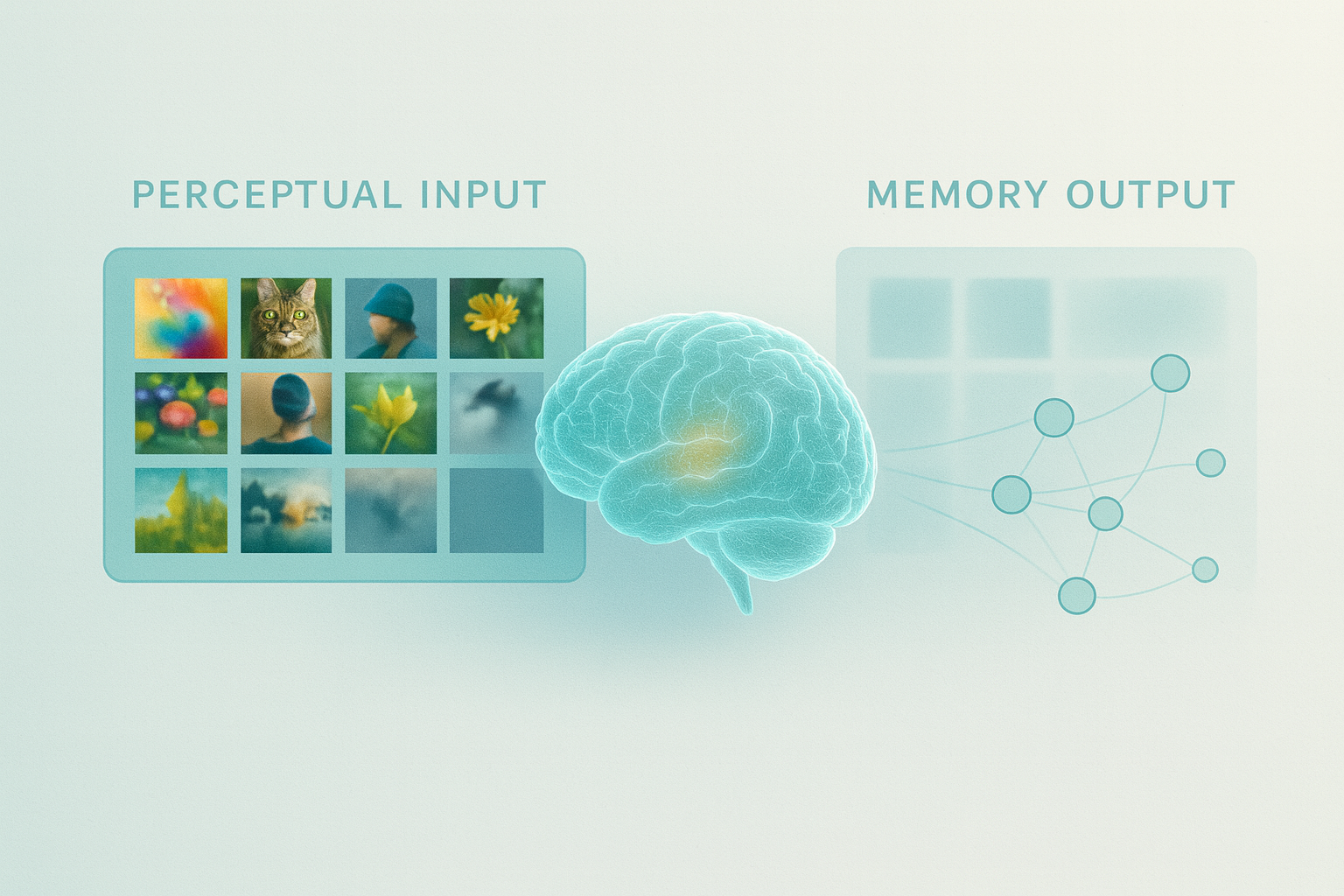
We see far more than we can recall. Using behavioural tasks, neuroimaging and computational models, we investigate how fleeting perceptions become lasting memories and why some experiences stick while others fade. This work probes the interplay between attention, awareness and memory, asking whether a science based on reports can ever capture the full richness of experience.
Ready to dive deeper into our research?